


CHALLENGE
Energy transition is one of the most significant challenges facing Poland and Europe. The high efficiency of heat pumps makes them one of the best solutions for effectively eliminating dependence on fossil fuels for buildings of various functions (single- and multi-family residential, office, commercial, and public buildings). A negative narrative undermining confidence in this technology could have a huge impact on the realization of a positive scenario, as the industry believes heat pump production could become one of the driving forces of our economy. From this perspective, countering disinformation about heat pumps is essentially a matter of Polish national interest.
DIAGNOSIS
The source of the heat pump problems were the rules of the government’s Clean Air program, which supported thermal modernization of buildings and replacement of heating sources, including heat pumps. According to the original rules, funds were transferred directly to the accounts of installation companies, where a dishonest minority, seeking to maximize profits, installed cheap, poorly selected, and low-quality devices. This was the cause of high electricity bills, not the technology itself.
Therefore, additional laboratory testing was required for heat pumps, a condition for their inclusion on the List of Green Devices and Materials that meet the Clean Air program criteria and, consequently, for receiving subsidies for heat pump purchases. Inclusion of products on this list within the regulatory deadline was virtually impossible for European manufacturers with a wide product range. Furthermore, in the spring of 2024, a narrative emerged undermining trust in the widespread and respected international HP Keymark certification system used by European manufacturers.
Changes to regulations, the resulting confusion, unfair practices by some installers, and misinformation deepened the “bad press” surrounding heat pumps. This translated into a significant decline in their popularity and significantly impacted the company’s market situation.
In the face of the crisis, Stiebel Eltron took steps to restore confidence in its proven technology. The company has over 50 years of experience in heat pump production, and its devices heat thousands of properties in Poland.
STRATEGY
The core of the anti-crisis efforts, combating disinformation, and reversing the narrative were Stiebel Eltron’s experience and facts about heat pumps, which were often overlooked in the deluge of negative messages and the decline of authority. According to a Eurobarometer survey, 64% of Poles indicated that they did not need science in their daily lives.
Stiebel Eltron focused on confronting the “horror stories” (which were also facts) by promoting diverse, and sometimes even “extreme,” examples of the thermal and economic efficiency of heat pumps. This required a longer timeframe for the campaign and a desire to maximize the reach of individual examples.
Target audiences included media outlets covering relevant topics, and through them, potential heat pump users, both individual and institutional, as well as government decision-makers.
An additional goal is to identify the differences between low- and high-quality pumps and to disseminate reliable and comprehensive knowledge about the technology in order to build a counter-narrative to false messages that devalue it.
The fight against disinformation was based on expert knowledge and specific examples of technology application in various types of facilities across Poland, under varying technical and climatic conditions.
Due to the time-scale and dynamic nature of the process, the KPI was generally defined as achieving at least equivalent reach to the messages that caused the crisis. The binary goal was to ensure that HP Keymark certification was recognized as sufficient for inclusion of devices on the ZUM list.
IMPLEMENTATION
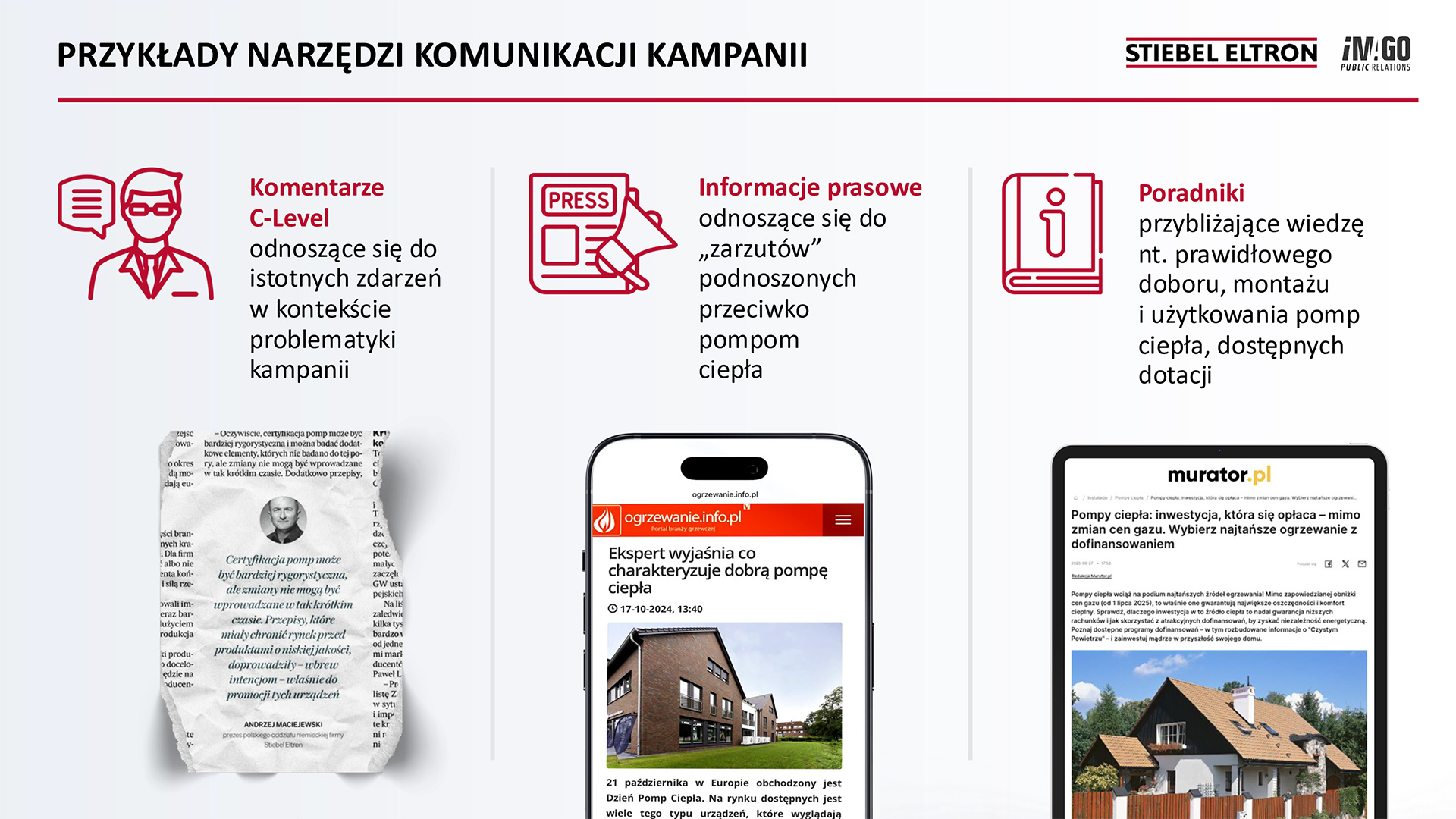
As part of the campaign, approximately 50 messages were developed (averaging approximately 3 per month), regularly informing target groups through the voices of Stiebel Eltron experts.
Communication tools included: C-Level commentaries addressing significant events in the context of the campaign; press releases addressing the “allegations” raised against heat pumps; guides providing information on the proper selection, installation, and use of heat pumps, available subsidies, and case studies describing the effects of proper installation, distributed to a select group of journalists.
The symbolic launch of the campaign was the material entitled “Heat Pumps: Don’t Throw Out the Baby with the Bathwater and Call a Spade a Spade.” A significant element of the activities was Stiebel Eltron’s push to build a common narrative among heat pump manufacturers within the PORT PC industry organization.
EFFECTS
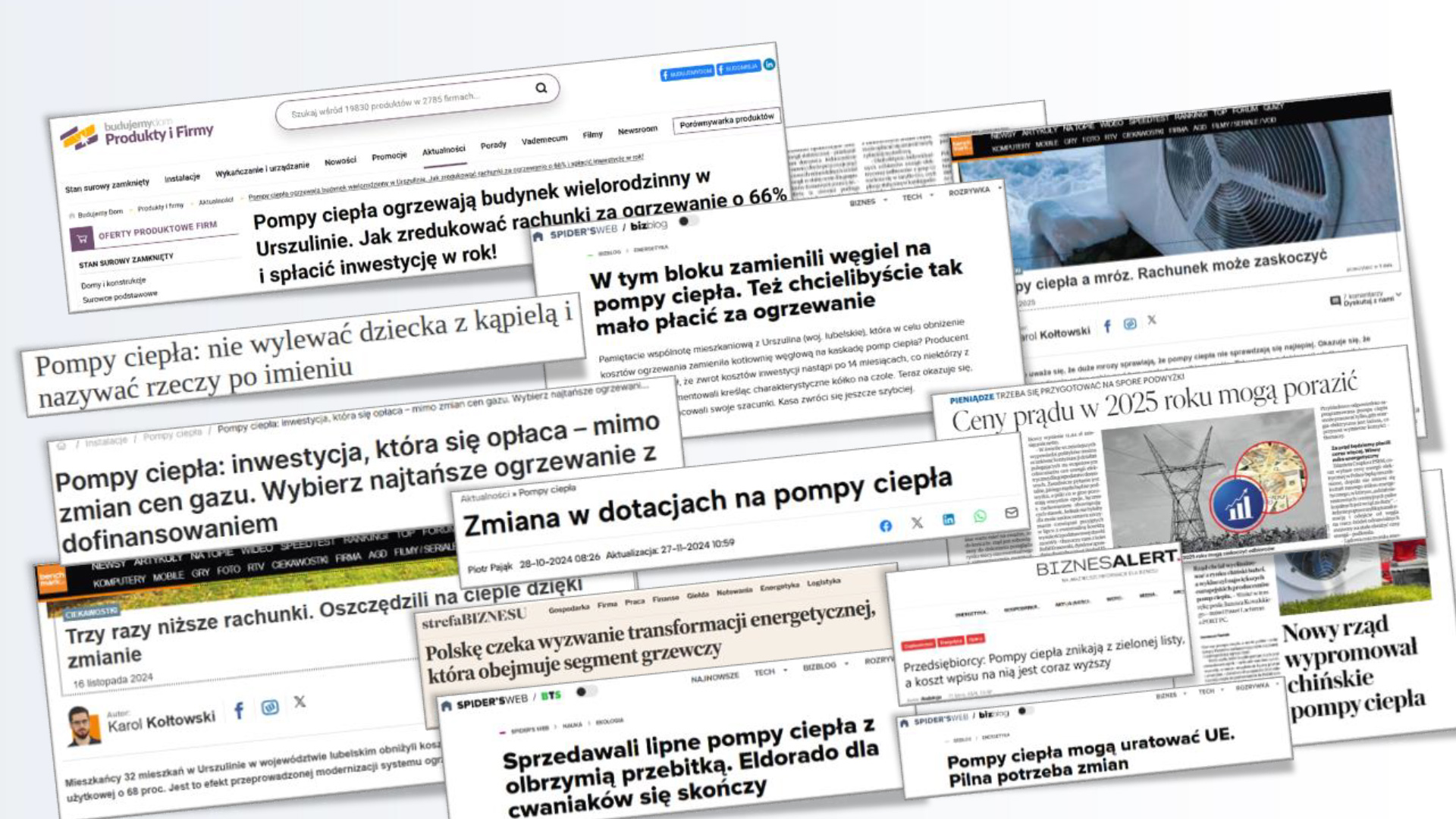
From February 1, 2024, to June 30, 2025, approximately 300 editorials related to heat pumps were published. Quality, fact-based publications appeared in industry media (construction, architecture, technology, interior design, HVAC, energy-RES, local and national opinion-forming outlets). The materials directly addressed misinformation about heat pumps and debunked myths using facts, case studies, and credible data. Estimated reach of the publications: approximately 3.5 million contacts (estimated AVE approximately PLN 1.6 million).
The materials generated by STE also contributed to the discussion on the principles of support for heat pumps in programs utilizing public funds and contributed to the introduction of further changes to the ZUM List Regulations. From spring 2025, the catalogue of products admitted to the ZUM List based on HP Keymark certification has been extended (restoring confidence in this certification system) to include ground source heat pumps, and the requirement for testing in certified laboratories for air source heat pumps has been limited.



Next project

Raising cyber awareness through media relations
more